 Kitchen + Dining
 Living + Bedroom Accents
 The Fall Edit
 New Arrivals
 The Lookbook
 Influencer Collections
 Gifts
Gifts
 The HGTV Edit






Quick answer: styling a tiered tray in 2026 means fewer pieces, not more. Pick one anchor object, build height with a footed riser instead of a flat metal stand, mix in two or three varied textures, and leave visible negative space on every level. The cluttered, sign-covered trays of a few years ago have given way to displays that look curated on purpose, and that shift starts with the base you build on.
The Big Shift: Tiered Trays Got Quieter
Tiered trays are still everywhere in 2026, but the styling has moved away from packing every inch with tiny seasonal signs and mismatched trinkets. The current look favors restraint: one theme, a tighter color palette, and enough breathing room between objects that each one actually registers. If your tray has felt "busy" no matter how you rearrange it, the fix usually isn't better objects, it's fewer of them.
This also means the classic dollar-store three-tier metal stand is losing ground to a more flexible approach: stacking a footed riser and a low tray to build your own height, then styling that combination like a single considered vignette rather than three separate shelves to fill. The Cojio Footed Travertine Tray is built exactly for this. Its pedestal base does the height-building work that a tiered stand used to do, but with one solid surface instead of three crowded ones.
Start With One Anchor Piece
Every well-styled tray has a single object your eye lands on first, and everything else supports it. Before you add anything else, choose that piece and put it down first. A pair of substantial salt and pepper mills works well as an anchor because it has real presence but still reads as functional rather than purely decorative. The Ophelia Mills + Cojio Travertine Riser Bundle pairs a set of brass Greek mills with a travertine riser already sized to sit together, which removes the guesswork of finding a riser proportioned correctly for what's sitting on top of it.
Once your anchor is placed, resist the urge to immediately surround it. Step back, look at the empty space around it, and only add a second item once you're sure the first one still has room to breathe.
Layer Height Before You Layer Objects
Height variation, not object count, is what makes a tray look intentional. A flat surface loaded with same-sized items reads as clutter almost instantly, while a display with two or three distinct height levels reads as styled even with fewer pieces on it. A flat wood tray as your base layer, a footed riser stacked on top for a second level, and one taller object like a bud vase or a stack of small bowls for the top gives you three heights using only two physical pieces of hardware.
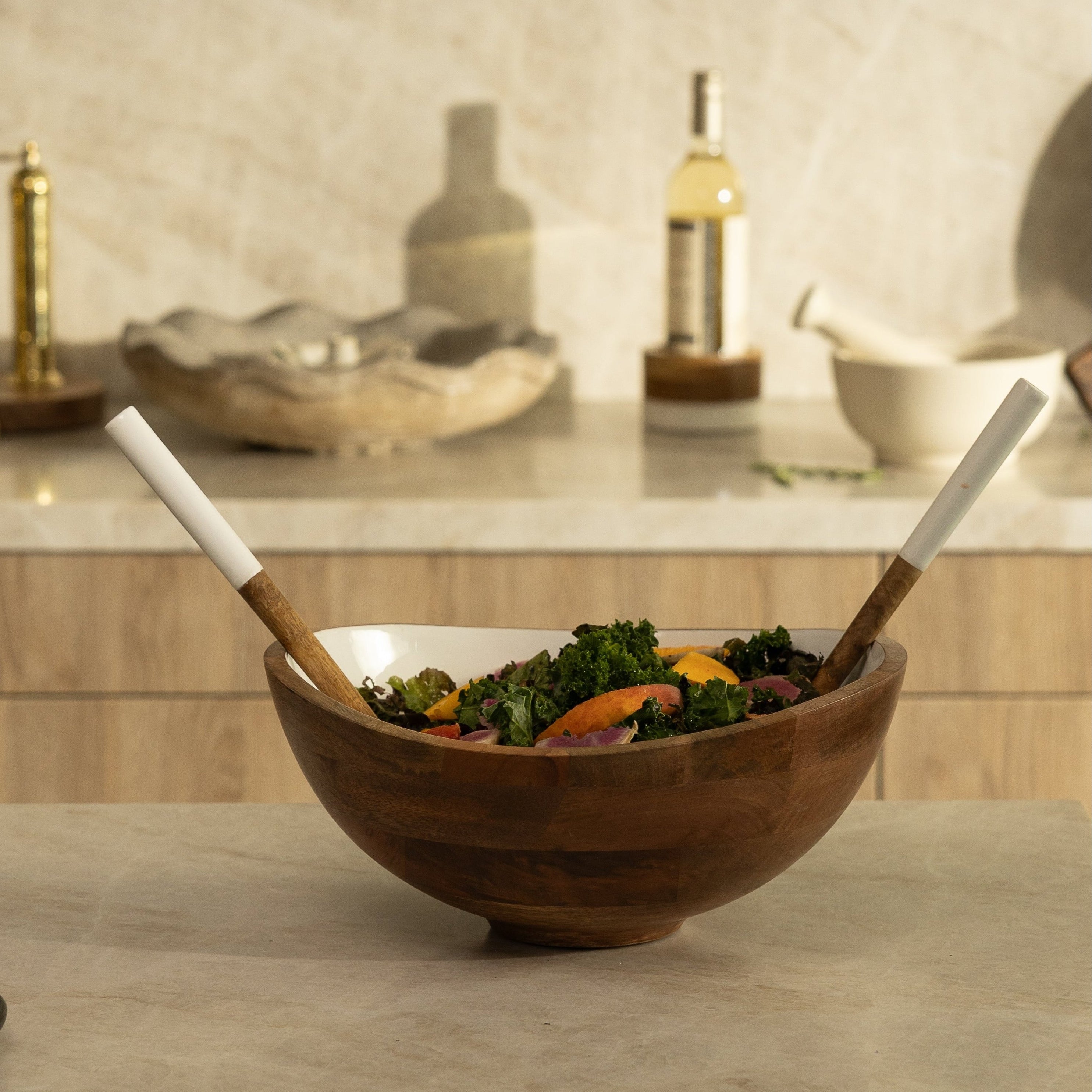
The Palmer Wood + White Tray works well as that base layer. Its hand-carved mango wood body and white enamel interior give you a warm, neutral surface that won't compete with whatever you stack on top of it, and it's sturdy enough to anchor a riser without shifting.
The 2026 Layering Formula
If you want a repeatable structure rather than starting from scratch every time, use this three-level formula as a starting checklist:
| Level | Role | What to Place There | Example |
|---|---|---|---|
| Base | Grounds the display, sets the color palette | A flat wood or stone tray in a neutral tone | Palmer Wood + White Tray |
| Middle | Adds height and a secondary texture | A footed riser or pedestal in a contrasting material | Cojio Footed Travertine Tray |
| Top / Anchor | The single object the eye lands on first | One substantial, functional piece with real presence | Ophelia Greek Brass Mills |
| Accent | Small, repeatable detail that ties the display together | A stack of coasters or a small textured object | Malia Coasters, Set of 4 |
Stick to two or three materials total across all four levels. Wood, stone, and brass (as in the formula above) is a reliable neutral combination because none of them compete visually with the others.
Mix Texture, Not Just Color
A cohesive color palette matters, but texture is what actually creates visual depth. Combining a smooth travertine surface, a warm hand-carved wood grain, and a set of soft woven or stoneware coasters gives a tray more dimension than color coordination alone ever will. The Malia Coasters are a simple way to add that third texture without adding visual weight. Stack them slightly off-center near the base of your riser rather than centering them, since a small deliberate offset reads as styled rather than accidental.
FAQ
What should you put on a tiered tray in 2026?
Fewer items than you'd think: one anchor piece with real presence, a riser or pedestal to add height, and one or two small textural accents like coasters or a stack of bowls. Skip filling every level completely, and leave visible negative space so each object stands out on its own.
Are tiered trays still in style?
Yes, but the styling has shifted from maximalist, sign-covered displays toward simpler, more intentional arrangements built around a single theme and a tighter color and material palette.
What can I use instead of a traditional three-tier metal stand?
Stacking a flat tray with a footed riser on top gives you the same height variation as a traditional stand, but with fewer, larger surfaces to style, which is easier to keep looking curated rather than cluttered.